Monitoring and Maintaining Building IEQ for Comfort, Health, and Sustainability
Indoor environmental quality (IEQ) involves the conditions people experience inside a building, including temperature, humidity, lighting, and ventilation. Monitoring those conditions alongside energy use helps you investigate comfort complaints and evaluate how building operation changes over time.
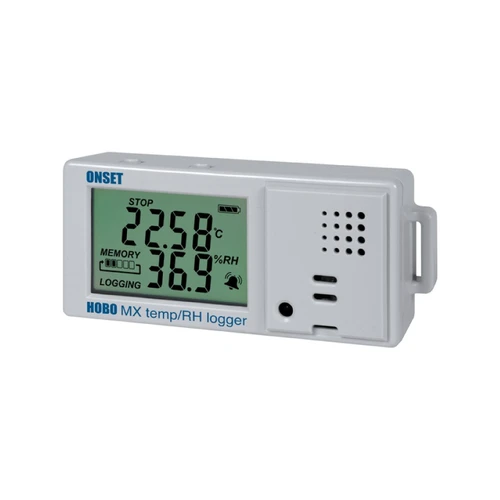
HOBO data loggers provide time-stamped records from rooms, HVAC zones, and selected equipment locations. Compare temperature and relative humidity patterns, review CO2 records alongside occupancy and HVAC information, and investigate whether operating schedules match actual use.
Choose the logger, sensors, and data-retrieval method for your study. Stand-alone instruments support local data collection, while compatible gateways and remote stations provide uploaded measurements and configurable notifications.
HOBO solutions to fit your indoor environmental monitoring needs

READY TO DEPLOY
Easily Get Started with Monitoring Solution Kits
Choose a monitoring kit for your air-handling unit, commercial heat pump, or other building-performance project. Review its included loggers, sensors, and accessories to confirm that it matches the measurements and deployment you need.
For a remote system, confirm the required gateway or station, power supply, network connection, and data plan before ordering.

How to Measure CO₂ to Improve Building Ventilation and IAQ
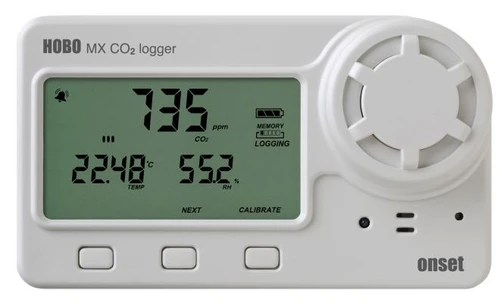
Learn how to use CO2 data loggers to investigate ventilation patterns in offices, schools, healthcare facilities, and residential buildings. This guide introduces CO2 logging for facilities managers and building engineers.
Review measurements alongside occupancy and HVAC operating information to provide context for your ventilation assessment.
Streamline Your IEQ Monitoring: Multi-Channel, Wireless Data Loggers
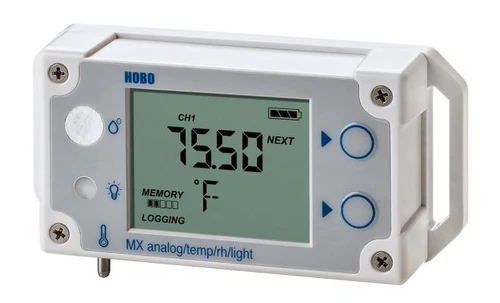
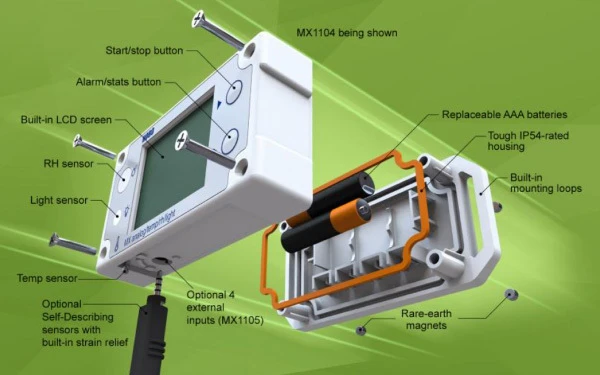
Use HOBO MX1104 and MX1105 multi-channel loggers for indoor environmental and energy-use monitoring, troubleshooting, and HVAC/R testing. The MX1104 records temperature, relative humidity, and light and includes an external analog input. The MX1105 provides four analog inputs for compatible sensors.
Select the model, sensors, and cables for the measurements you need. Use the HOBOconnect app for Bluetooth setup and local data offload. Compatible configurations can also send data to LI-COR Cloud through the app or an MX Gateway with an MX Data Plan.

Data Logger Basics for Building Performance Monitoring
Learn the basics about monitoring your building's energy consumption, heating, air conditioning, lighting, and more!
Plan an Indoor Monitoring Study
Begin with a specific question: Does a room become too warm during occupied hours? Does humidity rise overnight? Do lights or HVAC equipment run when the building is empty? Define the measurements and locations that will help you investigate that question before choosing equipment.
Place loggers where they represent the conditions you intend to study. Compare occupied spaces, HVAC zones, or known problem areas, and document sensor locations so repeated measurements can be interpreted consistently. Check that the selected sensors and any required cables or adapters suit each measurement location.
Choose a logging interval that captures the changes you expect, then plan when and how you will retrieve the records. For remote systems, consider the upload interval separately from the measurement interval and confirm power, communication, and data-plan requirements.
Need help getting started?