Improve Your IAQ and Monitor CO2 | HOBO Data Loggers
Mar 25th 2019
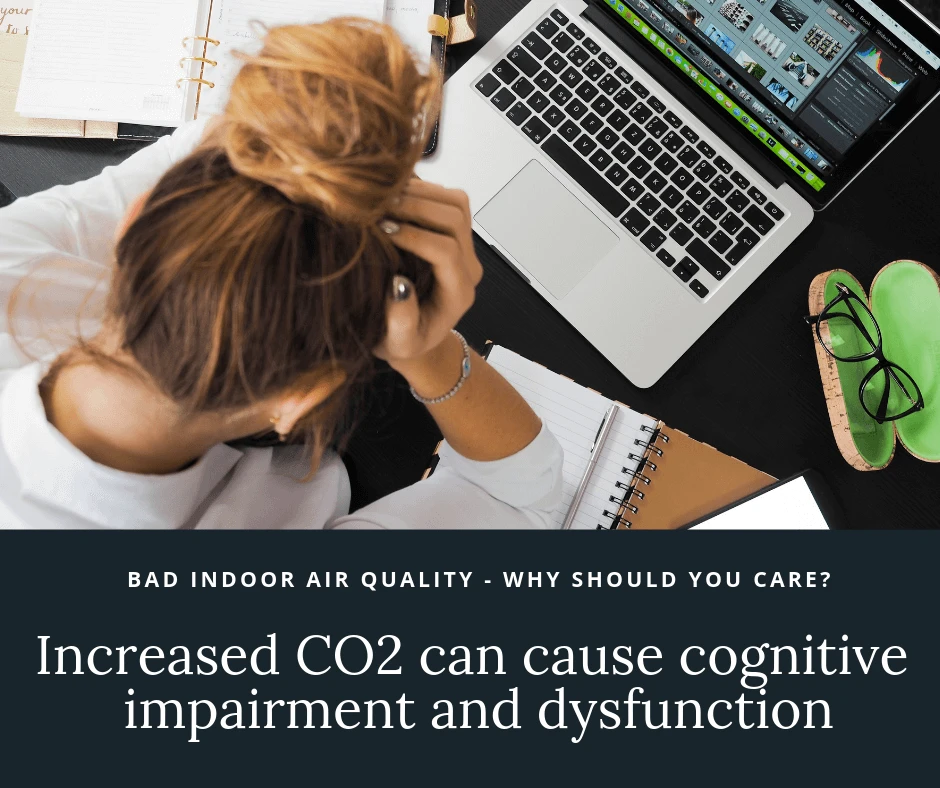
Carbon monoxide and carbon dioxide are different gases with different monitoring needs. This article focuses on carbon dioxide (CO2) and how monitoring it can help you investigate ventilation and indoor air quality (IAQ).
According to the U.S. Environmental Protection Agency, people spend about 90% of their time indoors. In occupied spaces, CO2 levels can change with the number of people in the room, their activity, and the amount of outdoor air being supplied. Monitoring those changes can help you understand how a space is being ventilated over time.
Key Takeaways
- CO2 can be a useful indicator when investigating ventilation in occupied spaces, but it does not represent every aspect of indoor air quality.
- A reading of 1,000 ppm is not a universal boundary between safe and unsafe indoor air.
- Recording CO2 over time can reveal patterns that a single spot measurement may miss.
What Is CO2?
Carbon dioxide is a colorless, odorless gas produced by processes including respiration and combustion. People naturally add CO2 to indoor spaces as they breathe, so occupancy and ventilation both influence the concentrations you measure.
That makes CO2 useful for evaluating certain ventilation questions, particularly in occupied spaces such as classrooms, offices, meeting rooms, and gyms. But CO2 is only one part of IAQ. A CO2 measurement does not tell you whether other pollutants, such as particulate matter, volatile organic compounds, or carbon monoxide, are present.
Why Monitor Indoor CO2?
CO2 measurements can help you investigate how conditions change throughout the day and how those changes relate to occupancy and building operation. For example, increasing CO2 during occupied periods may help identify when a space needs closer evaluation of its ventilation strategy.
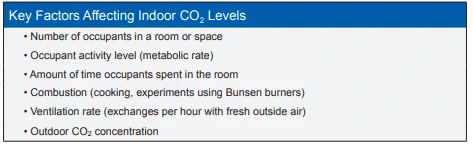
Several factors can influence indoor CO2 levels:
- Number of occupants
- Occupant activity
- Room volume
- Outdoor-air ventilation and air distribution
- Combustion sources
- Outdoor CO2 concentration
CO2 should be interpreted in context rather than against one universal indoor threshold. ASHRAE does not establish 1,000 ppm as a universal indoor CO2 maximum, even though that number is commonly used as a general reference point.
CO2 Levels: What Do the Numbers Mean?
Different CO2 values are used for different purposes. Ventilation indicators, occupational exposure limits, and immediately dangerous concentrations should not be treated as the same kind of threshold.
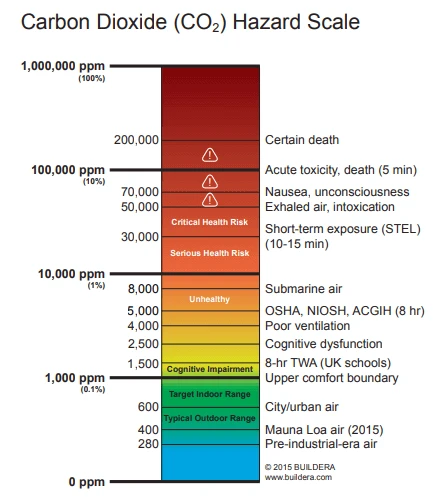
| CO2 Concentration | How to Interpret It |
|---|---|
| 1,000 ppm | Often used as a general indoor-air reference, but not a universal health or safety limit. |
| 5,000 ppm | OSHA's 8-hour time-weighted-average permissible exposure limit. NIOSH also lists 5,000 ppm as an 8-hour recommended exposure limit. |
| 30,000 ppm | NIOSH's 15-minute short-term exposure limit. |
| 40,000 ppm | NIOSH's immediately dangerous to life or health concentration. |
These occupational exposure values are not recommended everyday targets for offices, classrooms, or other normally occupied indoor spaces. For routine IAQ and ventilation work, interpret CO2 in relation to occupancy, outdoor conditions, and the question you are trying to answer.
How Can CO2 Data Logging Help?
A CO2 data logger records measurements at regular intervals, giving you a time-based view of how conditions change rather than a single reading. That can help you compare occupied and unoccupied periods, identify recurring patterns, and investigate how ventilation changes affect the space.
The HOBO MX1102A records CO2 from 0 to 5,000 ppm along with temperature and relative humidity. Bluetooth communication provides nearby access to recorded data through HOBOconnect.
Monitoring is the measurement step, not the solution itself. A data logger does not remove pollutants or adjust ventilation automatically, but the data can help you decide when a space needs further investigation or changes to building operation.
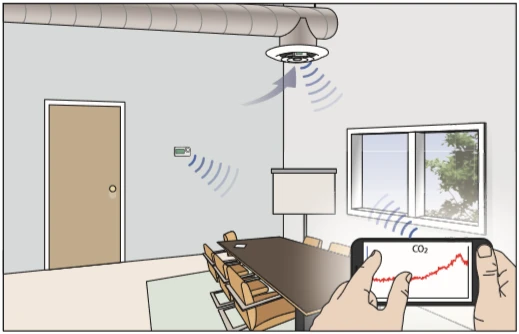
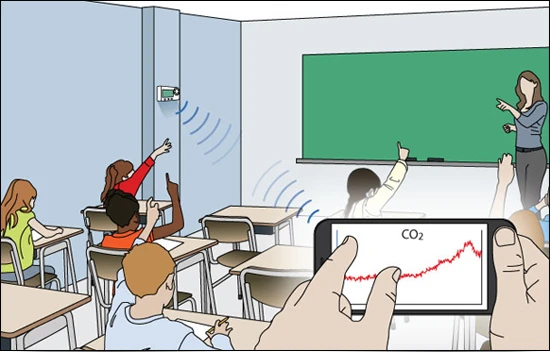
CO2 is only one part of indoor air quality, but tracking it over time can give you useful evidence about how occupied spaces are behaving and where a closer look at ventilation may be worthwhile.
Related Resources

How to Measure CO2 to Improve Ventilation/IAQ
Learn how CO2 logging can help facility managers and building engineers investigate ventilation and indoor air quality in offices, schools, healthcare facilities, and residential spaces.
Read MoreIndoor Environment Monitoring
See monitoring approaches and resources for indoor environmental quality, including CO2, temperature, humidity, HVAC performance, and occupant comfort.
Read MoreMost people think of outdoor air pollution when they think of CO2. So you’re probably picturing smoke stacks or car exhausts filling the air with noxious black smoke. But increased CO2 inside is also a big deal.