Environmental Monitoring for Museums | HOBO Data Loggers
Jun 17th 2024
Changes, Challenges, and Strategies for Environmental Monitoring in Collecting Institutions and Conservation
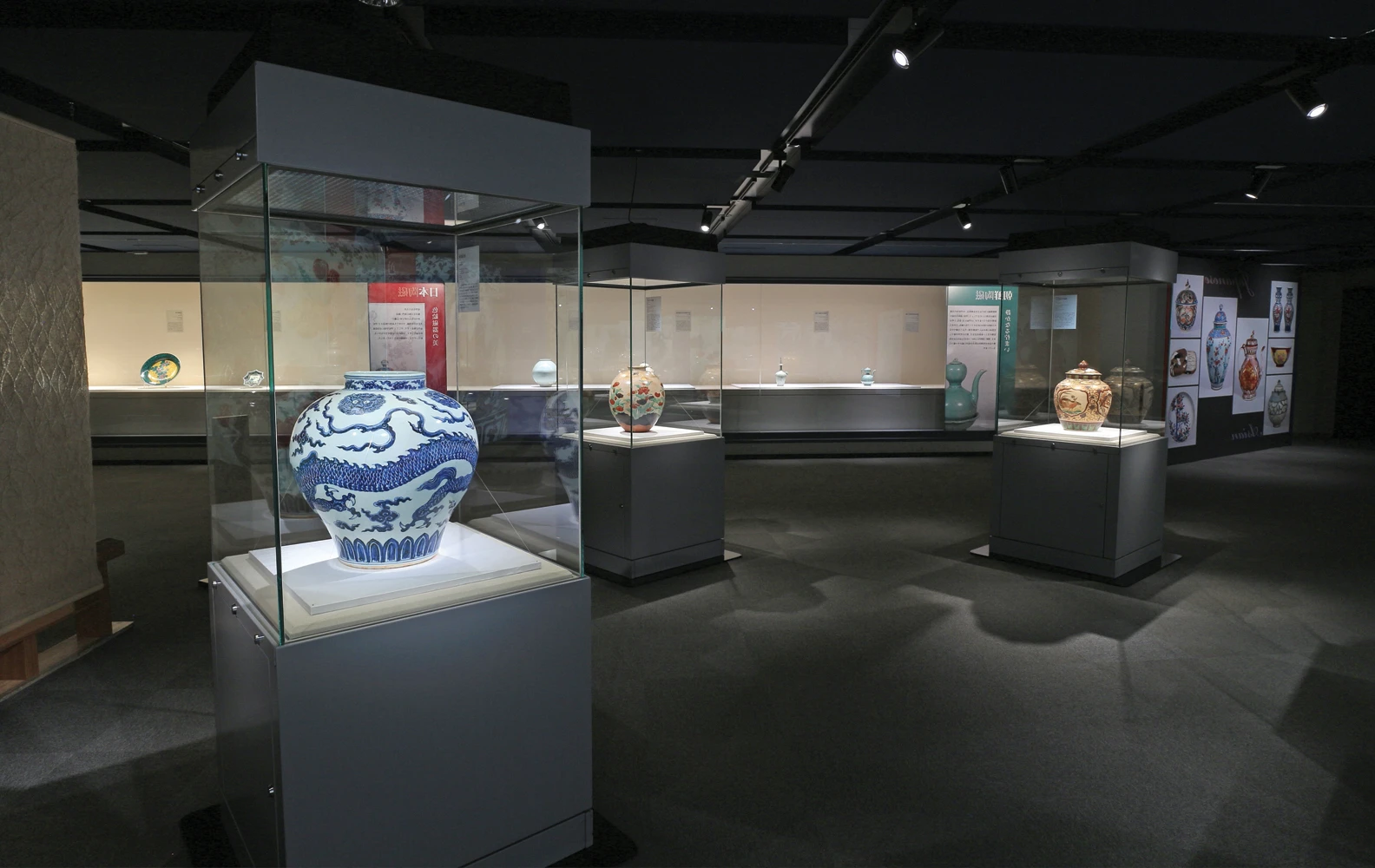
Conservation professionals work to preserve irreplaceable artifacts, documents, archives, and other cultural heritage materials for future generations. For museum and preservation teams, that means balancing the needs of collections with the realities of buildings, budgets, staffing, visitor comfort, and sustainability.
Environmental monitoring provides information that can help you understand those conditions over time. But successful preservation is rarely about maintaining one universal temperature or relative humidity (RH) setting. Different materials, spaces, climates, and risks call for different strategies.
This article looks at how environmental monitoring in collecting institutions has evolved and how practical monitoring tools can support informed preservation decisions.
Key Takeaways
- Appropriate environmental conditions depend on the collection, its materials, the building, and the risks being managed; one setting does not suit every situation.
- Temperature, RH, light, pollutants, pests, occupancy, and other factors can all influence collection environments.
- Bluetooth data collection, gateways, remote monitoring systems, and analysis platforms offer different ways to reduce manual work and interpret environmental data.
- Monitoring provides evidence for preservation decisions; it does not replace professional conservation judgment.
What Are the Agents of Deterioration?
Covert Threats to Conservation Efforts
If you’re in the preservation field, the term “agents of deterioration” is familiar. Collection-care professionals consider a range of physical, environmental, and human threats when developing preservation strategies.
The following conditions and operating factors are especially relevant to environmental monitoring:
-
Temperature
Temperature plays an important role in preservation because it can influence chemical deterioration, physical properties, and biological activity. Appropriate conditions depend on the materials being preserved and the risks associated with the collection rather than on one universal setpoint.
-
Relative Humidity (RH)
RH affects hygroscopic materials that gain or lose moisture as surrounding conditions change. Both the magnitude and duration of RH conditions can matter, and the appropriate range depends on the materials, their condition, the building, and the broader preservation strategy.
-
UV Exposure / Light Intensity
Light can cause cumulative and irreversible damage to sensitive materials. Monitoring can help collections staff evaluate exhibit lighting and exposure, but light intensity and ultraviolet radiation are different measurements and require appropriate sensors.
-
Dust and Pollutants
Dust, gaseous pollutants, and other airborne contaminants can contribute to deterioration. HVAC operation, filtration, housekeeping, and the building environment all play a role in controlling exposure. Temperature and RH monitoring can provide useful context, but those measurements do not directly measure every pollutant.
-
Occupancy
Visitor traffic is not itself one of the traditional agents of deterioration, but occupancy can influence conditions in collection spaces. Room volume, visitor density, exhibit layout, ventilation, CO2, temperature, and RH can all help staff understand how an occupied space behaves.
-
Pests
Textiles and other collection materials can be vulnerable to pests such as carpet beetles and clothes moths. Environmental management belongs alongside inspection, housekeeping, exclusion, and other integrated pest-management practices rather than serving as a stand-alone solution.
Other recognized agents of deterioration include physical forces, fire, water, theft and vandalism, and dissociation—the loss of objects, associated information, or the connection between them. Managing collection risk therefore requires a broader preservation strategy than environmental monitoring alone.
How Has Environmental Monitoring in Preservation Management Changed?
“Environment and environmental control are fundamental components of collections preservation; appropriate environmental conditions provide collections with chemical, biological, and mechanical stability to extend their life, making them available to future generations.”
— Smithsonian Institution, Declaration on the Collections Preservation Environment
No pressure, preservation professionals!
The questions involved in meeting that goal have become more complex as research, sustainability initiatives, building performance, staffing limitations, and institutional priorities have evolved:
- How can we achieve and maintain appropriate environmental conditions to preserve the objects and collections under our care?
- How do we balance human comfort, energy use, building needs, and collection longevity?
- How can an institution improve long-term financial and environmental sustainability while addressing preservation requirements?
- What monitoring strategy fits diverse objects and collections when staff, time, and resources are limited?
One important shift has been greater recognition that a single “ideal” temperature and humidity setting cannot describe the needs of every collection. Instead, preservation teams increasingly evaluate the materials, building, climate, duration of environmental changes, and the risks those conditions present.
The End of a Preservation Era
Traditional preservation practice often referred to a 70/50 rule: approximately 70°F and 50% RH. Research and institutional guidance have since helped move the field away from treating one tightly controlled setpoint as the only acceptable approach for all collections.
The Smithsonian’s Declaration on the Collections Preservation Environment, for example, states that tightly controlled 70°F and 50% RH is no longer considered an appropriate, practical, sustainable, or useful default for every collection. Historical Smithsonian guidance for many exhibition spaces has discussed a range of 37–53% RH and 66–74°F, but those figures should not be treated as a universal specification for every museum, material, or storage environment.
Instead, preservation strategies may consider collection materials, seasonal conditions, local climate, building-envelope performance, exhibit requirements, visitor comfort, and the capabilities of the mechanical systems. For some institutions, this can also create opportunities to manage energy use more sustainably without compromising collection care.
The Getty Conservation Institute’s Managing Collection Environments initiative reflects this broader approach. Its research and guidance emphasize that no single solution applies universally and that sustainable collection environments require technical information, institutional decision-making, communication, and a clear understanding of collection needs.
How Can Collections Institutions Manage Standards, Staffing, and Sustainability?
Environmental requirements are only part of the challenge. Collections professionals also work within budgets, staffing constraints, sustainability goals, building limitations, and other organizational priorities.
The Getty Conservation Institute’s Managing Collection Environments: Technical Notes and Guidance brings together approaches for understanding collection risks, analyzing environmental data, managing indoor climates, and building sustainable institutional strategies.
For an individual museum or archives team, the practical questions are often more immediate: Which spaces need closer attention? Which measurements will answer the preservation question? How often does someone need to retrieve the data? And how will staff recognize when changing conditions require action?
Museum Multitasking: Navigating the Demands of Active Environmental Monitoring with IoT Solutions
Library, archives, museum, and preservation specialists already juggle collection care with budgets, grants, exhibitions, programming, facilities coordination, and other responsibilities. A monitoring system should support that work rather than add unnecessary tasks.
Changes in environmental guidance and the number of variables collections teams may need to consider have increased the value of monitoring workflows that make information easier to collect and review.
Depending on the system and configuration, useful capabilities may include:
- Automatic delivery of data from compatible monitoring equipment
- Remote access to measurements
- Data visualization and reporting
- User-configured alarm notifications
- Exports for analysis in other preservation platforms
- Records that support proactive preservation decisions
Not every monitoring approach provides every capability in the same way. A Bluetooth download, an MX Gateway upload, and a remote HOBOnet system are different workflows. Matching the technology to staff resources, connectivity, collection needs, and the frequency of review helps make the system useful over time.
What Are the Best Monitoring IoT Tools for Museums and Collections?
There is no single monitoring configuration that fits every institution. Start with the preservation question, identify the measurements you need, and then consider how staff will configure equipment, retrieve data, recognize excursions, and share information.
Monitoring Tools That Are Easy to Set-up and Use
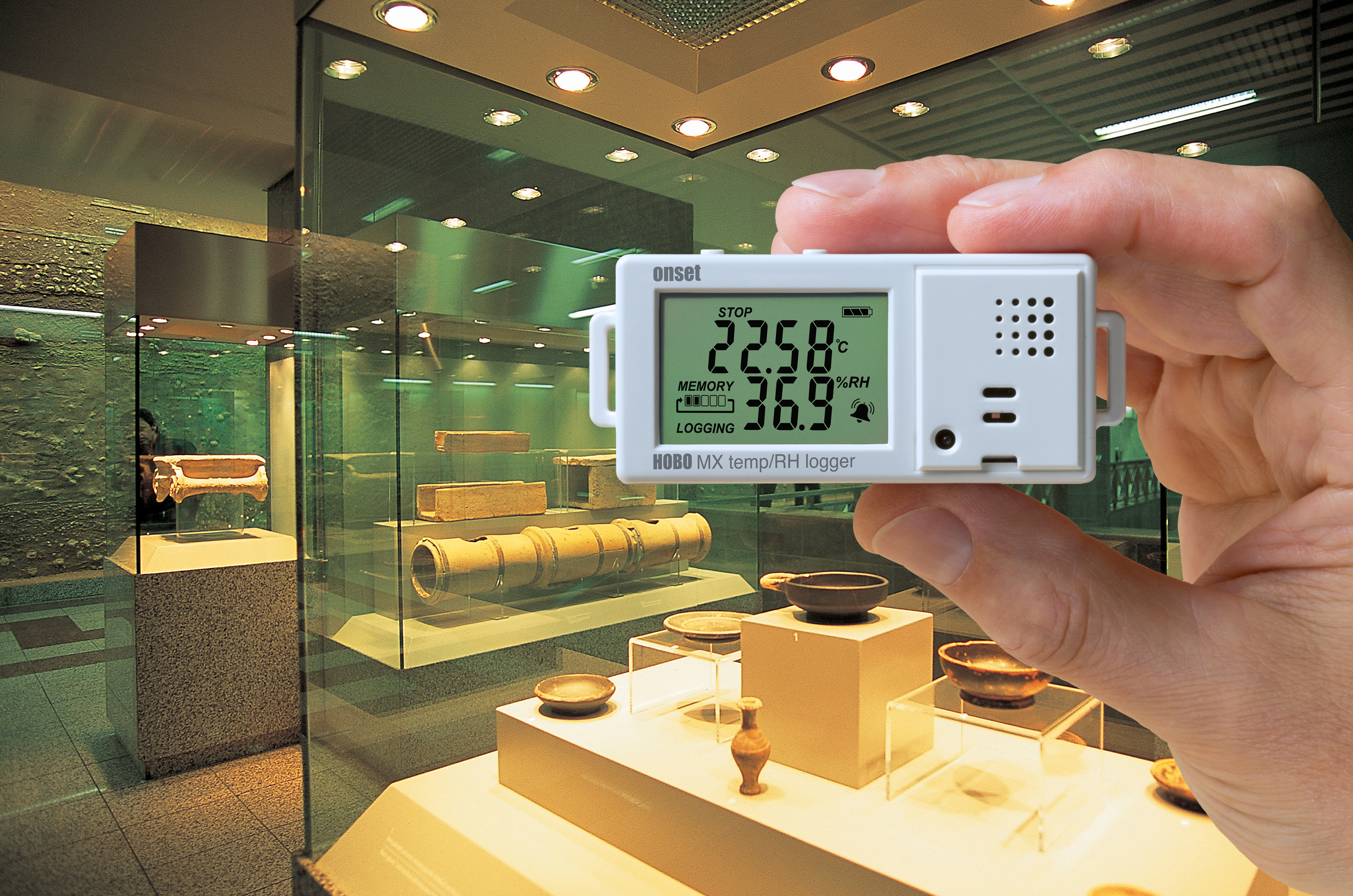
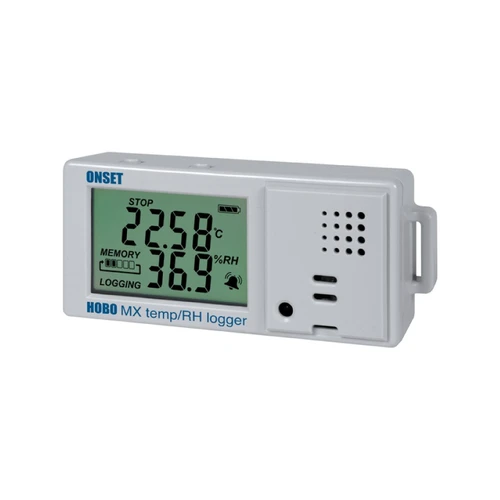
Bluetooth-enabled data loggers can simplify deployment and data retrieval in spaces where repeatedly accessing equipment may be inconvenient. The HOBO MX1101 Temperature/Relative Humidity Data Logger, for example, records temperature and RH and lets staff configure the logger and download measurements with HOBOconnect while within Bluetooth range.
Other HOBO MX models support measurements such as light and CO2, depending on the instrument selected. Choosing the right measurement is more important than trying to make one logger answer every preservation question.
“Setting up and reading out the loggers used to take an hour, but now we can finish this work in 15 minutes.”
— Idemitsu Museum of Arts representative
Remote Environmental Data to Inform Decisions
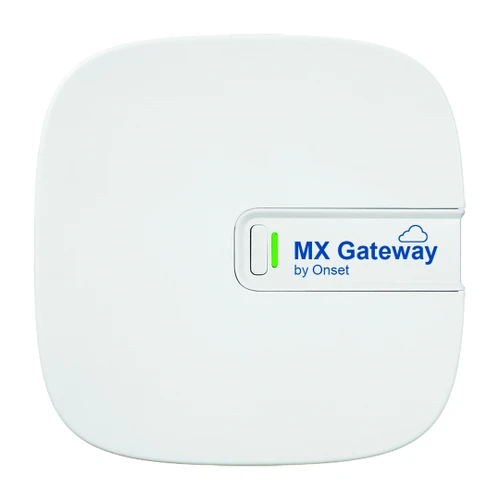
Local Bluetooth access is useful when staff can visit the logger. When remote access is more important, an MX Gateway can automatically offload data from compatible MX Bluetooth loggers and send it to LI-COR Cloud with the required data plan and internet connection.
LI-COR Cloud can provide dashboards, data visualization, exports, and user-configured notifications. Upload frequency and data availability depend on the selected logger, plan, and system configuration, so remote monitoring should not automatically be described as instantaneous or continuous for every setup.
Integration with Preservation Industry Platforms
Collecting environmental data is only part of the workflow. Preservation teams may also need tools that help them interpret what the measurements mean for particular materials and risks.
That is where analysis platforms can complement environmental monitoring. Depending on the platform, staff may export measurements for visualization, risk assessment, documentation, or other collection-care analysis.
Monitoring Tools to Meet the Modern Challenges of Museum Preservation
HOBO monitoring tools support several approaches to environmental data collection. Bluetooth-enabled MX data loggers can provide nearby wireless access, while MX Gateways and compatible cloud plans can add automatic uploads and remote access through LI-COR Cloud.
The value of that data is not simply that it is available. Time-based records can help conservation and facilities teams recognize patterns, document environmental excursions, compare spaces, and decide when additional investigation or intervention may be needed.
That response might involve reviewing HVAC operation, assessing humidity control, changing an exhibit location, or examining a vulnerable object more closely. The monitoring system provides evidence; conservation and facilities professionals determine the appropriate response.
Empowering Informed Decision-Making: RIT/IPI eClimateNotebook
HOBO temperature and RH data can also be used with eClimateNotebook, developed by the Image Permanence Institute at Rochester Institute of Technology.
Rather than assuming an automatic live integration, think of this as a data workflow: compatible HOBO data can be exported as a CSV file and uploaded for further preservation analysis.
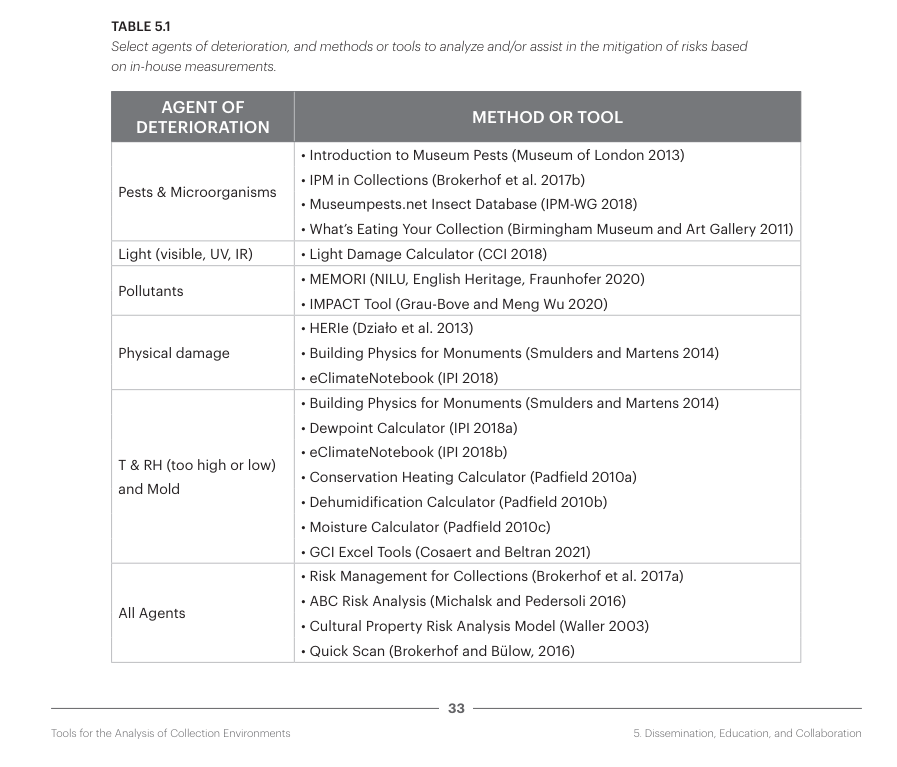
eClimateNotebook’s Preservation Metrics help collections professionals interpret environmental data in terms of risks such as natural aging, mold, metal corrosion, dimensional change (DC), and equilibrium moisture content (EMC). These metrics help translate temperature and RH records into preservation context; they do not directly measure mold growth or physical damage to an object.
Tailored Preservation Monitoring Solutions
Museums, galleries, libraries, archives, and heritage institutions vary widely in scale. A small exhibit may need only a few temperature/RH loggers, while a larger facility may benefit from a network spanning multiple rooms or buildings.
For wider indoor deployments, the HOBOnet Remote Sensor Network for Indoor Monitoring can connect up to 50 supported wireless sensors to a compatible HOBO RX station and provide remote access through LI-COR Cloud. The selected station, sensors, connectivity, and data plan determine the measurements and workflow available.
The goal is not to collect more data simply because you can. A useful monitoring program collects the measurements that answer the preservation question, makes those measurements accessible to the people who need them, and supports informed decisions about collection care.
With a monitoring approach matched to your collection, building, staff, and preservation priorities, environmental data becomes a practical tool for understanding conditions and protecting cultural heritage over time.
Explore Museum Monitoring Tools
Related Resources

Streamlining Museum Environmental Monitoring
See how the Idemitsu Museum of Arts used HOBO temperature and RH loggers to reduce the time required to collect environmental data from galleries, display cases, and storage areas.
Read MorePreserving Musical Artifacts at the National Music Museum
Learn how museum conservators used HOBO temperature and RH loggers to monitor galleries and storage spaces housing instruments, sheet music, books, uniforms, and other collection materials.
Read MoreTracking Environmental Conditions at the Hunter Museum
Explore how registrars at the Hunter Museum of American Art used wireless temperature and RH data to document conditions across multiple buildings and support collection-care decisions.
Read MoreReferences
Taylor, Joel, Michael C. Henry, Vincent Laudato Beltran, Walt Crimm, Matthew Eckelman, Jane Henderson, Jeremy Linden, Michał Łukomski, Bob Norris, Sarah Nunberg, and Cecilia Winter. 2023. Managing Collection Environments: Technical Notes and Guidance. Edited by Joel Taylor and Vincent Laudato Beltran. Los Angeles: Getty Conservation Institute. View the publication.
Cosaert, Annelies, Vincent Laudato Beltran, Geert Bauwens, Melissa King, Rebecca Napolitano, Bhavesh Shah, and Joelle Wickens. 2022. Tools for the Analysis of Collection Environments: Lessons Learned and Future Development. Los Angeles: Getty Conservation Institute. View the publication.
Smithsonian Institution. Declaration on the Collections Preservation Environment. Read the declaration.