Fighting Flooring's Foe: How Monitoring Humidity Can Protect Flooring Installations
Sep 23rd 2024
Humidity & Moisture—Hardwood Flooring's Nemesis
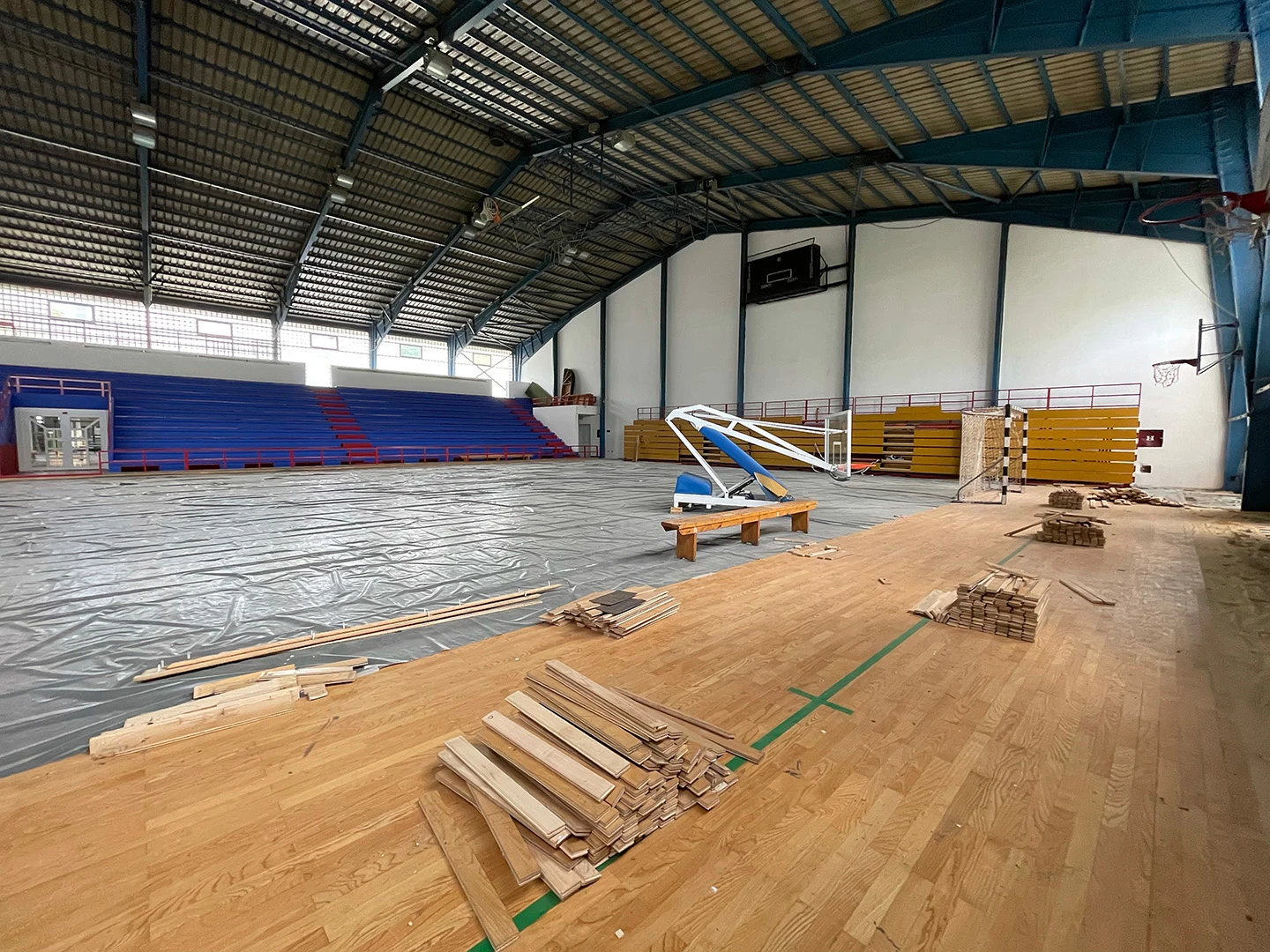
The cold hardwood fact? Moisture can undo even a carefully planned flooring installation.
As a flooring professional, you understand the role that temperature and relative humidity (RH) play before, during, and after installation. Conditions that fall outside the requirements for the flooring, adhesive, or subfloor can contribute to failures, warranty questions, and dissatisfied customers. A time-stamped environmental record gives you more useful evidence than a single reading taken during a site visit.
Hardwood is especially responsive to its surroundings because wood is hygroscopic: it exchanges moisture with the air. As RH increases, wood can absorb moisture and expand. As RH decreases, it can release moisture and contract. Those dimensional changes can contribute to cupping, gaps, cracks, or other movement when conditions differ substantially from what the flooring was designed to experience.
Other materials, including bamboo, engineered wood, laminate, vinyl, adhesives, and concrete subfloors, have their own environmental and moisture requirements. The right conditions depend on the complete flooring system, not on one universal humidity number.
Key Takeaways
- Room RH and flooring moisture content are different measurements; one does not replace the other.
- Temperature, RH, acclimation, subfloor moisture, and product-specific requirements should be evaluated together before installation.
- Continuous environmental records help you recognize changing conditions and document what the flooring experienced over time.
- A data logger records conditions; it does not control humidity, replace material testing, or guarantee warranty compliance.
Flooring Issues When Temperature and Humidity Aren't Monitored
Poor indoor conditions or unsuitable material moisture content can create serious consequences for contractors and property owners. A room may appear ready during a daytime visit but experience very different conditions overnight, over a weekend, or when the heating or cooling system is changed.
That is why installation preparation should include both material testing and environmental monitoring. The flooring manufacturer, adhesive manufacturer, and applicable installation guidance should define the acceptable conditions and test methods for the project. A continuous temperature and RH record can then show whether the surrounding environment remained within the required range.
Ideal Moisture Content (MC) for Flooring Installations
Ambient RH describes moisture in the air. Moisture content (MC) describes the amount of moisture within wood or another material. A temperature/RH logger measures the surrounding environment; it does not directly measure the MC of the flooring or subfloor.
Material testing should therefore be performed with the appropriate method for the flooring and substrate. Wood flooring, wood subfloors, concrete slabs, and other materials may require different instruments, sampling locations, and acceptance criteria. Follow the flooring manufacturer's instructions and recognized installation guidance rather than applying a single MC limit to every project.
For wood, equilibrium moisture content (EMC) is the moisture content at which the material is neither gaining nor losing moisture under a given temperature and RH. Acclimation allows flooring to move toward the conditions it is expected to experience in service. The target MC and the acceptable difference between the flooring and wood subfloor depend on factors such as the product, species, board width, geographic region, and manufacturer requirements.
The National Wood Flooring Association maintains current technical guidelines covering installation, moisture, regional climate, and flooring problems. Those resources are a stronger basis for project decisions than a universal percentage applied to every room or floor.
Review the NWFA technical guidelines.
Common Problems with Flooring
Environmental and material moisture problems can show up in several ways. The appearance of the floor may suggest a moisture issue, but the cause should be investigated before deciding on a repair.
Swelling Bamboo Floors and Buckling. Oh, My!
Wood flooring and wood-based products can absorb or release moisture as surrounding conditions change. Expansion can create pressure between boards or against fixed surfaces. In severe cases, a floor may lift or separate from the subfloor. Flooding, leaks, prolonged moisture exposure, insufficient expansion space, or other installation conditions can all contribute.
Monitoring room temperature and RH can reveal when the environment changed, but it cannot identify every source of moisture beneath or within the flooring. Investigate the subfloor, plumbing, building envelope, and installation details as needed.
Hardwood Flooring Cupping and Crowning
Cupping and crowning describe different board profiles associated with moisture imbalance.
-
Cupping
The edges of a board are higher than its center. This pattern can develop when moisture conditions differ through the thickness of the board.
-
Crowning
The center of a board is higher than its edges. The moisture history and any previous sanding or repair work should be evaluated before assuming that current room humidity explains the condition.
A flooring professional should assess the material, subfloor, and moisture history before recommending corrective work.
Gaps and Shrinkage in Flooring
In dry environments, hardwood and some engineered products may lose moisture and shrink, leaving gaps between boards. Some seasonal movement can be expected, but large or persistent gaps may indicate that conditions are outside the flooring system's requirements. A continuous record can help show whether the pattern aligns with heating seasons, HVAC changes, or other building operations.
Flooring Cracking
Wood may split or crack when it becomes overly dry or experiences substantial moisture changes. Conditions near a fireplace, heating outlet, exterior wall, or area of direct sunlight may differ from the rest of the room. Monitoring several locations can help identify these localized differences.
Mold and Mildew Growth in Flooring
Damp materials and prolonged moisture can support mold growth and damage flooring or materials beneath it. Address the moisture source as well as the visible damage. Temperature and RH records can provide context, but they do not replace an inspection for leaks, wet subfloors, or concealed moisture.
Flooring Adhesive Failure
Temperature, humidity, and substrate moisture can affect adhesive curing and bonding. Tiles or planks may lift or separate when the site does not meet the adhesive manufacturer's requirements. Review the specified temperature range, RH range, substrate preparation, moisture limits, and required conditioning period for the complete flooring system.
Concrete Flooring Problems and Humidity – The Curing and Sealing Quandary
Concrete introduces an important distinction: curing and drying are not the same process. Fresh concrete requires moisture for cement hydration and strength development. Later, an adhesive, coating, or floor covering may require the slab to meet a specified moisture condition before installation.
Temperature, RH, and airflow influence evaporation, but a dry-looking surface does not establish that a slab is ready to receive flooring. Use the test method and acceptance criteria specified for the planned flooring system. Ambient room RH is useful context, but it is not a substitute for an approved concrete moisture test.
The American Cement Association explains that curing maintains the moisture needed for hydration, while ACI guidance addresses external curing methods and moisture control. The existing Concrete Countertop Institute resource also offers a practical overview of how temperature, RH, and dew point affect concrete work.
Explore the concrete temperature and RH resource.
Best Humidity Levels by Type of Flooring
There is no single temperature or RH range that applies to every flooring product. Use the requirements for the flooring, adhesive, substrate, and expected occupied conditions. The examples below provide useful context, but the project specifications and manufacturer instructions remain the controlling guidance.
Optimal Hardwood Flooring MC and Humidity
The National Wood Flooring Association's general homeowner guidance recommends maintaining wood-floor environments between 60°F and 80°F (about 16°C to 27°C) and between 30% and 50% RH year-round. A particular flooring manufacturer may specify a different range, so confirm the requirements for the actual product.
Room conditions are only part of the decision. Measure the flooring and subfloor with the required method, document the readings, and consider the expected conditions after the building is occupied. A stable room does not make an unsuitable material MC acceptable, and a material reading does not show how the room behaved over the previous several days.
Review NWFA moisture-management guidance.
Bamboo Flooring, Engineered Wood, or Laminate Flooring
Bamboo, engineered wood, and laminate are manufactured differently and should not be treated as one material category with one universal range. Some may be more dimensionally stable than solid hardwood, but they still require suitable jobsite conditions, acclimation when specified, and an acceptable subfloor.
For example, Shaw's current laminate-installation guidance calls for a fully operational HVAC system and conditions of 65°F to 85°F with 35% to 65% RH. That is an example for its products, not a replacement for the instructions supplied with another manufacturer's flooring.
See Shaw's laminate-installation guidance.
Vinyl and Resilient Flooring
Vinyl and other resilient flooring may be less responsive to ambient humidity than wood, but the adhesive and substrate remain important. The product instructions may specify jobsite temperature, conditioning periods, concrete moisture limits, pH requirements, and how long conditions must be maintained after installation.
Do not use a generic room RH range to decide whether a concrete slab is ready. Follow the specified substrate test method and the limits for the selected flooring and adhesive.
Optimal Conditions for Curing Concrete
Curing keeps moisture available so concrete can continue to hydrate and gain strength. Methods may include water, moisture-retaining materials, plastic sheeting, or curing compounds, depending on the project specifications and surface requirements.
After curing, the slab may still need time to dry before a floor covering or coating can be installed. Evaluate curing and flooring readiness as separate stages. The correct temperature, duration, moisture test, and acceptance criteria should come from the concrete and flooring specifications.
Can You Prevent Floors From Swelling?
You can reduce risk by following the required installation practices, correcting moisture sources, maintaining appropriate occupied conditions, and monitoring how the environment changes over time. No monitoring device can guarantee that a floor will not swell, but reliable records can help you identify conditions that deserve attention before they become a larger problem.
The Importance of Monitoring Temperature and Humidity for Flooring
Protect Your Investment
Continuous temperature and RH monitoring documents the environment surrounding an installation. When a concern arises, a time-stamped record is more useful than relying on memory or a single high/low reading.
Those records can support conversations with customers, general contractors, facilities teams, and manufacturers. They can also help show when building operation changed after installation. Monitoring does not prove that every installation requirement was met or guarantee warranty coverage, so keep the environmental data with the material tests, site notes, product instructions, and other project documentation.
The goal is not simply to collect data. It is to recognize meaningful changes and decide when the HVAC system, humidity control, site conditions, or flooring materials need further investigation.
How to Track Flooring Conditions
The Power of Continuous Humidity Monitoring
A data logger records temperature and RH at selected intervals, revealing patterns that an occasional site visit may miss. Choose locations that reflect the conditions affecting the installation, and avoid placing every logger where it will experience the same airflow, sunlight, or heat source.
Bluetooth-enabled HOBO MX data loggers support nearby setup and data download through the HOBOconnect app. When you are within Bluetooth range, you can review current readings, download the historical record, graph the data, and share files.
For automatic cloud uploads, compatible MX loggers can work with an MX Gateway, an MX Data Plan, and LI-COR Cloud. The Gateway uses Wi-Fi or Ethernet to send logger data to the cloud. That configuration can reduce routine collection trips and support user-defined notifications, but it is different from Bluetooth-only monitoring.
What Can I Use to Monitor Humidity for My Flooring Installation?
Wireless Monitoring Solutions for Flooring
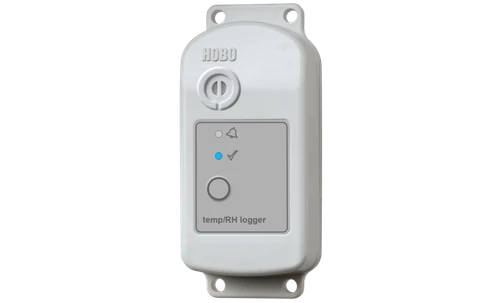
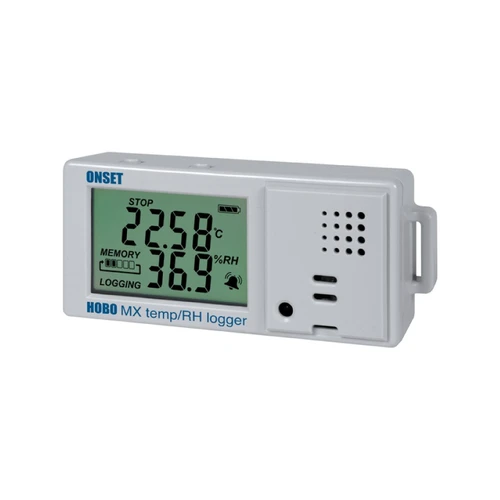
HOBO MX1101 Temperature/Relative Humidity Data Logger
The indoor HOBO MX1101 records temperature from -20°C to 70°C and RH, with Bluetooth communication for setup and data download through HOBOconnect. It is a practical option for tracking occupied rooms, installation areas, and other indoor spaces where a compact logger can remain in place.
Use its records to recognize changes in room temperature and RH, document acclimation and installation conditions, and support project discussions alongside the required material tests.
HOBO MX2301A Temperature/RH Data Logger
The weatherproof MX2301A records temperature from -40°C to 70°C and RH. Its rugged housing makes it useful when the monitoring location is more demanding or when the logger needs added protection. Like the MX1101, it uses Bluetooth and HOBOconnect for nearby setup and data retrieval.
Bluetooth does not provide off-site access by itself. You must be within communication range unless the logger is part of a compatible Gateway and cloud configuration.
Flooring Installation Temperature & Humidity Monitoring Kit
For multi-point projects, the MX-FLOOR kit includes 10 MX1101 temperature/RH loggers. The kit supports monitoring at several locations across a jobsite rather than assuming that one measurement represents the entire installation area.
MX Gateway and LI-COR Cloud
An MX Gateway can automatically offload data from compatible MX loggers and send it to LI-COR Cloud when the required MX Data Plans and internet connection are in place. This can help flooring contractors monitor multiple projects, review trends, share records, and configure cloud notifications without visiting every logger for each download.
Should You Monitor Humidity and Temperature for Flooring?
Monitoring is most valuable when it is part of a complete installation process. Combine the environmental record with flooring and subfloor moisture tests, manufacturer requirements, site observations, and a clear plan for responding when conditions change.
With that context, temperature and RH data can help you make better-informed decisions, document what the floor experienced, and address potential problems with evidence instead of assumptions. A little data can go a long way when it is collected in the right places and interpreted alongside the rest of the project information.
Explore Flooring Monitoring Solutions
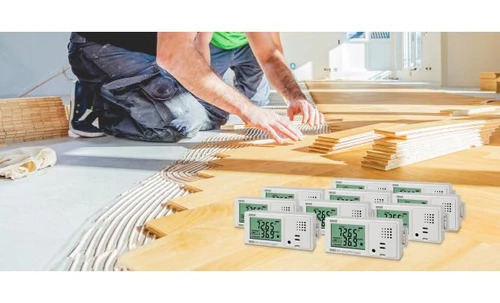
Ensuring optimal humidity and temperature conditions during and after flooring installations is key. Protect your projects, reputation, and your bottom line with wireless, affordable loggers.