Ambassador Overview
Scott McBain, owner of Applied River Sciences, specializes in fluvial geomorphology and large-scale river-restoration projects. His team uses HOBO water-temperature loggers, water-level loggers, and remote monitoring stations to collect reliable field data in challenging locations. On the Shasta River in Northern California, these instruments helped the team evaluate water level, streamflow, and temperature to inform instream-flow recommendations.
River Science and Restoration Expertise
Applied River Sciences is a professional consulting corporation that applies fluvial geomorphic and ecological research to river preservation, management, and restoration.
What is your current occupation?
I’m the owner of Applied River Sciences, formerly McBain Associates.
Please tell us a little about yourself.
I grew up in Northern California, spending much of my time fishing and becoming connected to rivers and water. I studied environmental engineering at Humboldt State University and earned my master’s degree in civil and hydraulic engineering at the University of California, Berkeley. That experience helped focus my career on working with rivers.
I currently live in Arcata, California, and typically spend my non-work time fishing and backpacking.
What is your area of expertise?
My area of expertise is fluvial geomorphology—or, more simply, being a river nerd. I facilitate, plan, and implement large-scale river-restoration projects, particularly on rivers downstream of dams.
What motivates you to do this work?
My main motivation is my love of rivers and the complexity of how their different components—including sediment, water, vegetation, fish, frogs, and birds—interrelate and depend on fluvial processes.
I’m also motivated by the opportunity to change how rivers are managed, improving their ecological function while continuing to provide water, sediment, fish, and other important resources for human use.
What would you consider your greatest accomplishment?
One of my greatest accomplishments is creating a stimulating and effective work environment for our employees—one that gives them the satisfaction of making positive changes to our rivers.
Some of our company’s biggest accomplishments include developing new flow-release regimes that are now being implemented on several regulated streams in California and Oregon. We’ve also seen fishery recovery in streams that is partly associated with these new flow regimes, including the Clackamas, Tuolumne, and Trinity Rivers and streams within the Mono Lake basin.
What do you hope to achieve in the future?
I want to pay it forward by training and inspiring the next generation of engineers and ecologists to continue and improve upon the important river-ecosystem work that Applied River Sciences has accomplished over the past 30 years.
Monitoring Water Level, Flow, and Temperature with HOBO Data Loggers
Which HOBO monitoring products do you regularly use?
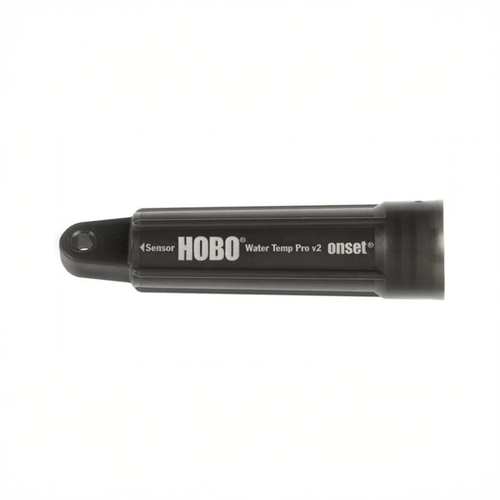
We use HOBO U22 water-temperature data loggers, U20 water-level data loggers and pressure transducers, and RX3000 remote monitoring stations.
Most of our instream-flow development projects require accurate information about water level, streamflow, and water temperature. These measurements provide the foundation for our instream-flow recommendations by helping us understand how much water is in a river system, the temperature of that water, and how those conditions change across seasons and different water-year types.
How HOBO Data Loggers Supported the Shasta River Project
Please describe a project in which HOBO data loggers played an important role.
On the Shasta River in Northern California, we installed a network of HOBO monitoring stations throughout the watershed to measure impaired streamflows in the river and in irrigation ditches. These measurements enabled us to calculate unimpaired flows more accurately.
We also installed a network of water-temperature data loggers to better understand impaired and unimpaired water temperatures throughout different seasons and water-year types.
We then used the resulting streamflow and water-temperature data to frame our instream-flow recommendations downstream of major water diversions.
Why Reliable Field Data Matters
Which HOBO product features are most important to your work?
Reliability and ease of use are especially important because many of our monitoring stations are located in remote areas.
How does accurate data contribute to better river-management decisions?
Accurate water-level and water-temperature data are crucial for building confidence in our findings. Reliable monitoring data also give our clients and the public greater confidence in the flow recommendations and river-restoration work that we complete.