Market Garden and Woodshop Instructor at William Roper Hull School
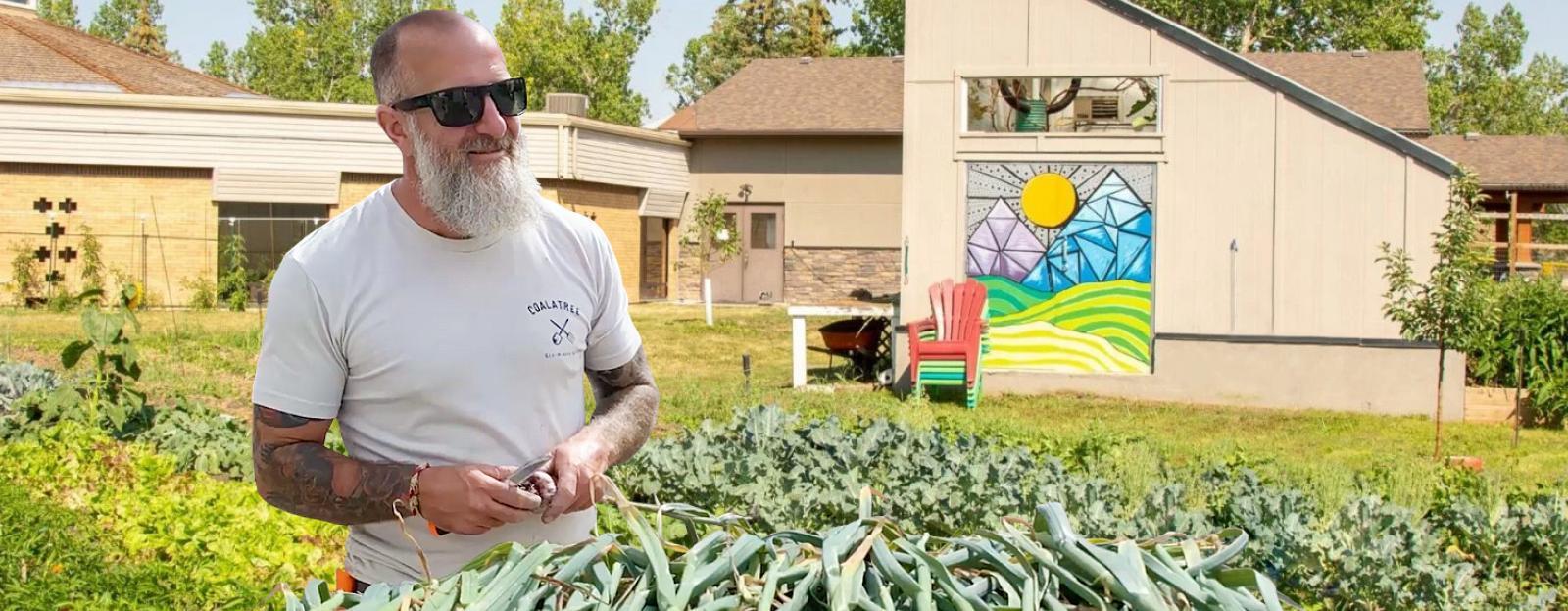
Vaden Somers, a teacher and permaculture enthusiast, spearheaded a passive solar greenhouse project at his school and now collects data to show “how good these systems can actually be.”
What is your current occupation?
I’m a market gardener and woodshop instructor at the William Roper Hull School in Calgary, Alberta. The school
services kids with complex mental health needs and is co-located with multiple mental health treatment facilities at
a 30-acre campus in South Calgary. A major project I’ve been involved with at the school over the past seven
years or so is building and operating a passive solar greenhouse and market garden. The passive solar greenhouse
allows us to grow year-round and mimic temperatures and growing conditions from much warmer climates.
Please tell us a little bit about your yourself.
I was born in Northern New Brunswick, in a little town called Miramichi. I’m living now in a community called
Haysboro, in southwest Calgary. I was educated at Saint Mary’s University in Halifax, Nova Scotia (a long time
ago now) and studied sociology and some criminology, which helped spark my interest in understanding and working
within community settings. My parents were foster parents when I was young, active in the church, and summer camps.
Always lots of excitement, consistently centered around the health of the community, which was a valuable part of my
education, though I didn’t realize it at the time.
What’s your area of expertise?
I think the foundational piece of my area of expertise is the human connection piece – and that ranges across all
demographics. Whether I’m dealing with a 5-year-old in my woodshop or having a conversation with a co-worker, just
being sensitive to the importance of that interpersonal relationship. Otherwise, I am a white-belt-level grower, but
mother nature is a stern but fair teacher, and lessons continue.
What is your primary motivation for doing the work that you do?
I just really get a charge out of being in productive, flourishing community spaces – and that’s what we’re trying
to promote here at the school. It motivates me to see that kind of community develop, a very strong community that
has insulating capabilities for its members, because it’s stable and safe and calm.
What’s your greatest accomplishment?
I have two children, a 10-year-old and an 8-year-old, and they’re pretty amazing kids. Whenever I’m with them I’m
real proud to see that they’re growing up to be well-adjusted, empathetic individuals. And I get feedback from their
teachers that they see things in my kids that they don’t always see in other children. That makes me feel
proud.
Professionally, the farm at the school is kind of developing into my life’s work. We're now looking at templating
the system, a "farm-in-a-box" concept - and delivering it to other community groups and other schools. And data
collection, and aggregating that data, really builds the case for how good these systems can actually be, especially
here in USDA Zone 3, where there's only 100 days of frost-free weather per year. For example, we deployed a data
logger in a low tunnel that's inside a larger grow tunnel and determined that despite an outside temperature of -25
C, it's still above frost inside the low tunnel, so it's safe to plant.
What do you strive to achieve in the future?
I would say exporting these systems elsewhere, along with a suite of information about what we’re using at our
school, what’s worked well for us. I’m totally convinced that every school should be hiring a farmer. Take a
half-acre of your unused soccer fields, put one of these little farms in, and watch what happens. I guarantee you’re
going to draw the community into the system, and the amount of food that you can produce is phenomenal. The yields
from these small, productive systems are incredible, and not just in the area of food production.
I am encouraged to see the system here at the school continue to grow and become a beacon for other communities. In
fall of 2023 we installed a fishpond and an outdoor kitchen. We are excited to deploy sensors in the pond to monitor
water health, and build yet another productive system.
Personally, we bought some land north of Calgary, where about 12 other like-minded families live, all within about
10 minutes of each other. We plan to pool our resources and build out a larger community that uses permaculture
principles to design our farms. I have a little off-grid cabin up there now, and hope to gradually build on that and
then have a place to go when and if I retire.
Have you ever thought about the name HOBO and what it means?
Never really thought about it until you asked!
What HOBO products do you use on a regular basis?
I use the
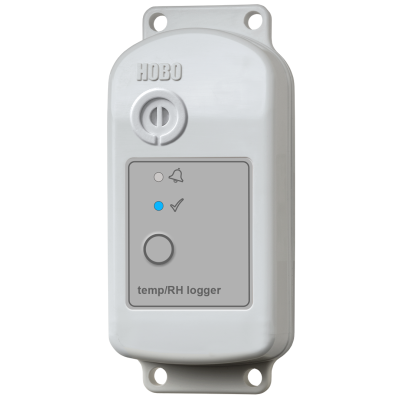
HOBO MX2300 series. Mostly logging temperature and humidity cycles throughout the year. Indoor/outdoor temperature and RH and system
monitoring.
Please describe a specific project where HOBO data loggers played a key role.
HOBO data loggers played a key role in the design and optimization of our passive solar greenhouse. Passive solar
greenhouses are not new, but they are somewhat novel. Designed mostly for cold climate season extension, they are
highly insulated on three sides and in the foundation walls. They use climate batteries or Annualized Geo-Solar
systems (using soil as thermal mass) to offset the cost of heating and cooling. We used HOBO loggers to prove that
the system design is sound, to make improvements for future passive solar designs, and to optimize growing
conditions through four seasons growing in USDA Zone 3.
What HOBO features do you consider most important?
The accessibility of having a Bluetooth product is really nice. And then being able to move that data into the
cloud. When I started leveraging that capability, I was able to share data with designers who were designing passive
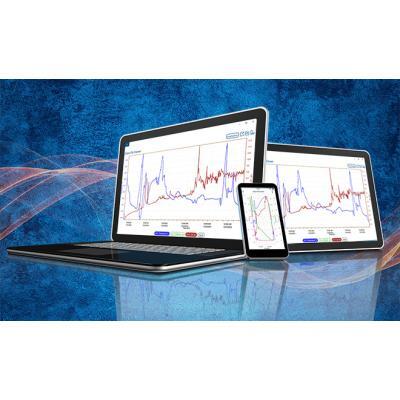
solar greenhouses elsewhere. And instantaneous access to graphing in the
HOBOconnect app
made making decisions easier and feedback almost immediate. I check my temperatures and RH pretty regularly,
especially when it’s cold. I can reference temperatures over the last three nights, for example, and check
temperatures inside and outside the greenhouse. Then I can make management decisions based on the data – adjusting
temperature day to day, as needed, with the two heating systems that we use in concert: a climate battery (that’s
part of the soil system) and our natural gas system.
Do you think accurate data can help you build a better tomorrow?
In food production, data is really important to be able to understand when your system is healthy and optimized. The
more data you have, the easier it is to make good decisions and maximize efficiencies in the growing process. And if
you can maximize your efficiency, you’re doing what’s right for the planet at the same time. I’m really excited
about all the new technology that’s coming out to help farmers collect data in the fields. And in regenerative
systems, optimization leads to abundance. That’s the better part of tomorrow I am interested in.